
Your body runs on a rhythm—and you may be working against it
Many women notice these shifts, but don’t fully connect the pattern:
Mornings feel slow or rushed. Hunger is unpredictable early in the day. Energy dips harder in the afternoon. Evenings feel like a second wind—or complete exhaustion, and the day rarely feels steady from start to finish.
These shifts can feel like inconsistency or lack of discipline. But often, the pattern reflects something deeper.
Your body runs on a circadian rhythm—an internal 24-hour clock that organizes:
• Energy
• Hunger
• Hormones
• Sleep
• Metabolism
This rhythm is influenced by light, timing of food, and daily structure.
Chronotype—whether your body naturally leans earlier or later—also shapes how you respond across the day. When your schedule, meals, and light exposure don’t align with this rhythm, signals become less coordinated.
Hunger shows up at unexpected times. Energy becomes less predictable. Recovery becomes less efficient. The body isn’t disorganized. It’s responding to mixed timing signals.
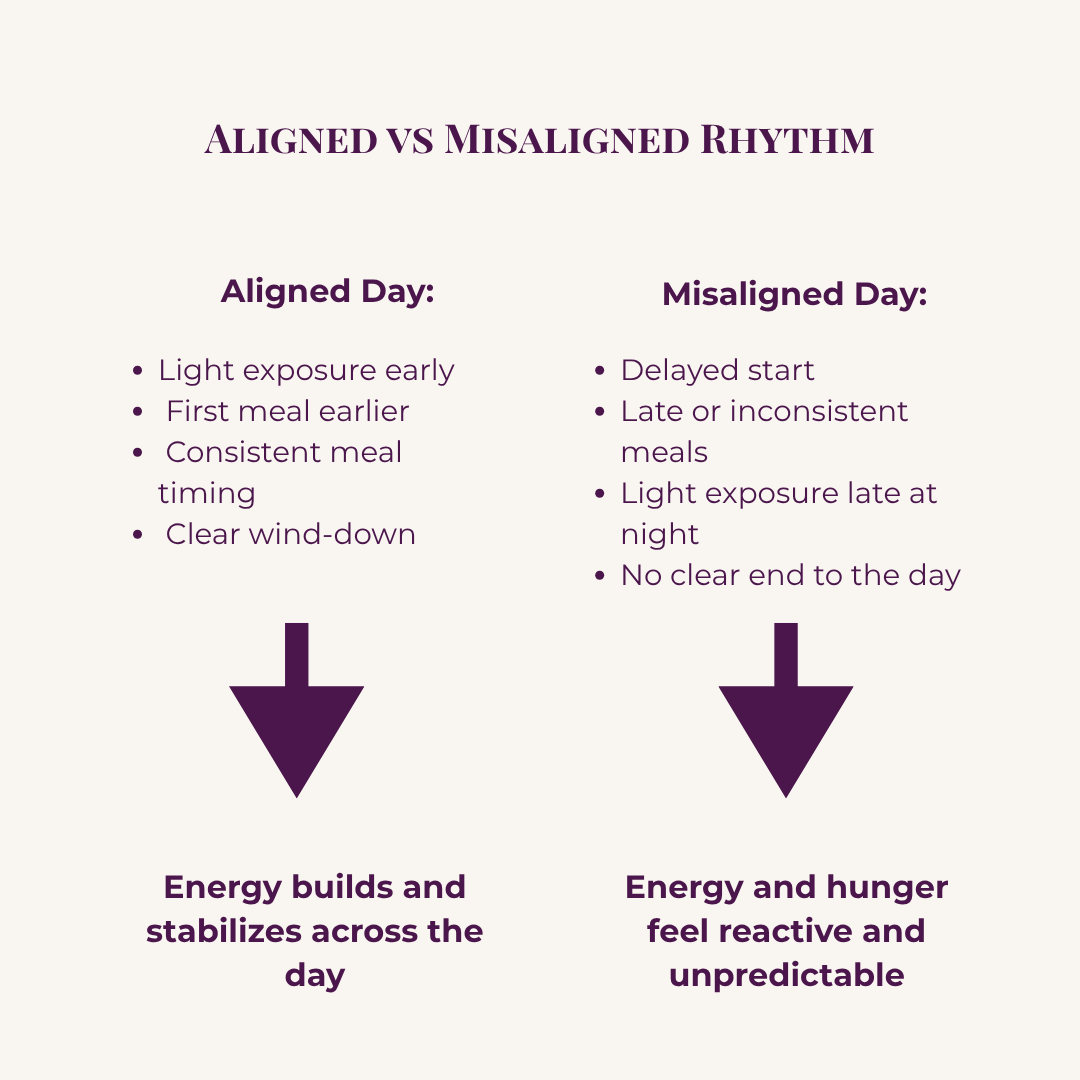
Many women try to fix symptoms with having more caffeine in the morning, eating less later, pushing through fatigue, or trying to “reset” sleep.

But the pattern often unfolds as a delayed start to the day, followed by inconsistent timing, which leads to late compensation and a disrupted rhythm. As a result, the body never receives a clear, steady daily signal.
Trying to improve energy or appetite without stabilizing timing often leads to short-term adjustments—but not lasting change. The issue isn’t just what you’re doing. It is also the timing of when your body receives those signals. Without a consistent rhythm, the body keeps recalibrating instead of adapting.
Try one shift this week by anchoring the start of your day. Within 60–90 minutes of waking:
• Get natural light (even briefly)
• Eat a simple, stabilizing first meal
• Start your day at a similar time
Then notice if your energy feel more predictable across the day. This is where the body begins to respond differently. When timing becomes more consistent, signals become easier to interpret—and easier to regulate.
P.S. Inside Rhythm, this is what we build—not a better morning, but a more organized day. Because when your day holds, your body responds differently.
Responses