Many women I work with notice this shift quietly. What used to work… doesn’t work the same anymore and wonder why my body is reacting so differently now?
Skipping meals hits harder. Poor sleep lingers longer. Stress affects hunger more quickly. Weight feels easier to gain and harder to lose.
In midlife, the body becomes more sensitive to inconsistency. Hormonal shifts, changes in muscle mass, sleep disruption, and stress responsiveness all reduce the margin for error.
That means small variations now carry more impact. A delayed meal. A poor night of sleep. A few days without structure. These shifts that once felt manageable can now create larger changes in hunger, energy, recovery, and blood sugar stability.
Your body is not failing. It is responding more quickly to variability.
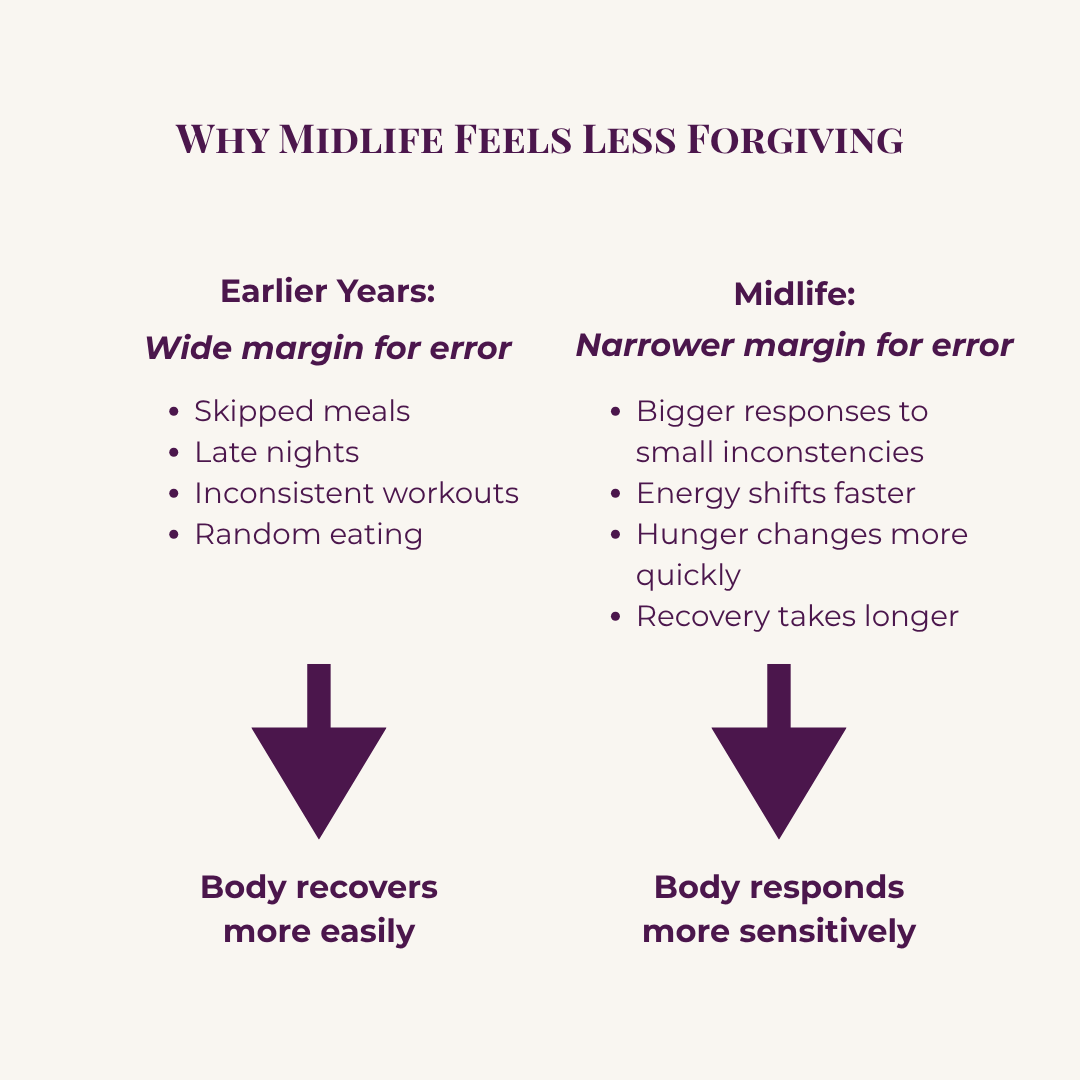
Many women assume they simply need more discipline. But in midlife, small inconsistencies often create bigger physiological responses, leading to frustration and the feeling of starting over again.
Trying harder often isn’t the answer, because the challenge is not motivation, it’s variability. When signals change too often, the body works harder to compensate.
This week, choose one area to reduce variability. For example:
• Eat lunch within a 60-minute window each day
• Build a more repeatable breakfast
• Create a consistent evening close to eating
Then notice: Does your body feel more predictable when fewer variables are changing?
This is why rhythm matters. It reduces the variability your body is constantly responding to.
P.S. Rhythm doesn’t ask you to be perfect. It helps create enough consistency for your body to stop reacting—and start responding.



Responses