
Many women notice this pattern first in the afternoon.
Energy drops harder. Focus gets foggy. Cravings feel more urgent. And by evening, it suddenly feels difficult to feel satisfied.
So they assume: “I must be eating too much.” Or: “I need more willpower.”
But often, the issue started much earlier in the day.
In midlife, the body becomes more sensitive to inconsistent fueling patterns.
Skipping breakfast. Waiting too long to eat. Eating lightly all day and then trying to “be good” through hunger.
These patterns create larger blood sugar swings now than they used to.
And when blood sugar becomes less stable, the body responds predictably: Hunger gets louder. Energy becomes less steady. Stress feels harder to regulate. Evening eating becomes more difficult to control.
The body is not overreacting. It is trying to protect stability.
Blood sugar regulation is not only about what you eat. It is also about whether your body receives fuel consistently enough to trust availability.
Many women try to manage this by tightening control: less food, more restriction, starting over Monday.
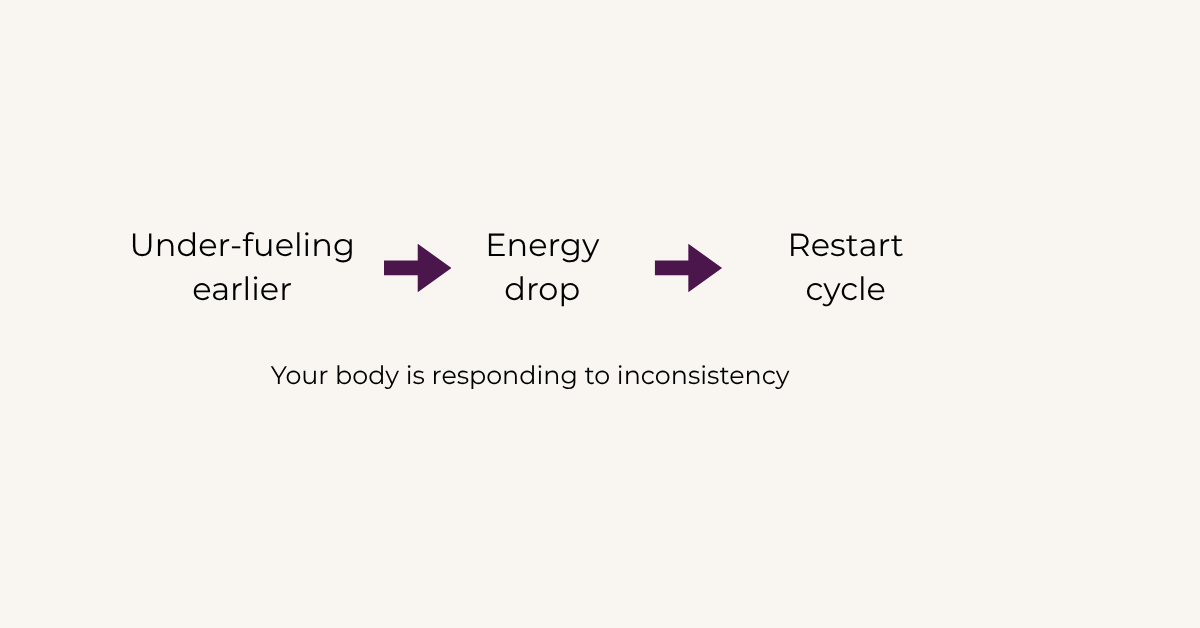
But the pattern often becomes: under-fueling earlier → compensation later → frustration → restart
And the cycle repeats.
Research continues to show that consistent eating patterns support cardiometabolic health, glucose regulation, and long-term cardiovascular health outcomes. Regular movement and resistance training also improve insulin sensitivity and blood sugar regulation, particularly in adults with elevated cardiometabolic risk.
This week, instead of focusing on eating less, try focusing on steadier signals. For example:
• Eat within a more predictable window
• Build a more repeatable lunch
• Add protein earlier in the day
• Reduce long gaps between meals
Then notice, does your body feel less urgent when it feels more consistently supported?
Because blood sugar stability is not built through perfection. It is built through patterns your body can repeat.
P.S. Inside Rhythm, we focus on helping the body receive steadier signals across the week—so hunger, energy, and recovery stop feeling so reactive.

Responses